How artificial intelligence is reshaping regulatory compliance and the future of risk management
Remember when compliance meant drowning in spreadsheets, manually reviewing thousands of transactions, and hoping your team caught that one suspicious activity buried in last quarter's reports? Those days are rapidly becoming ancient history. This is the era of RegTech, where artificial intelligence is fundamentally changing how organizations approach regulatory obligations.
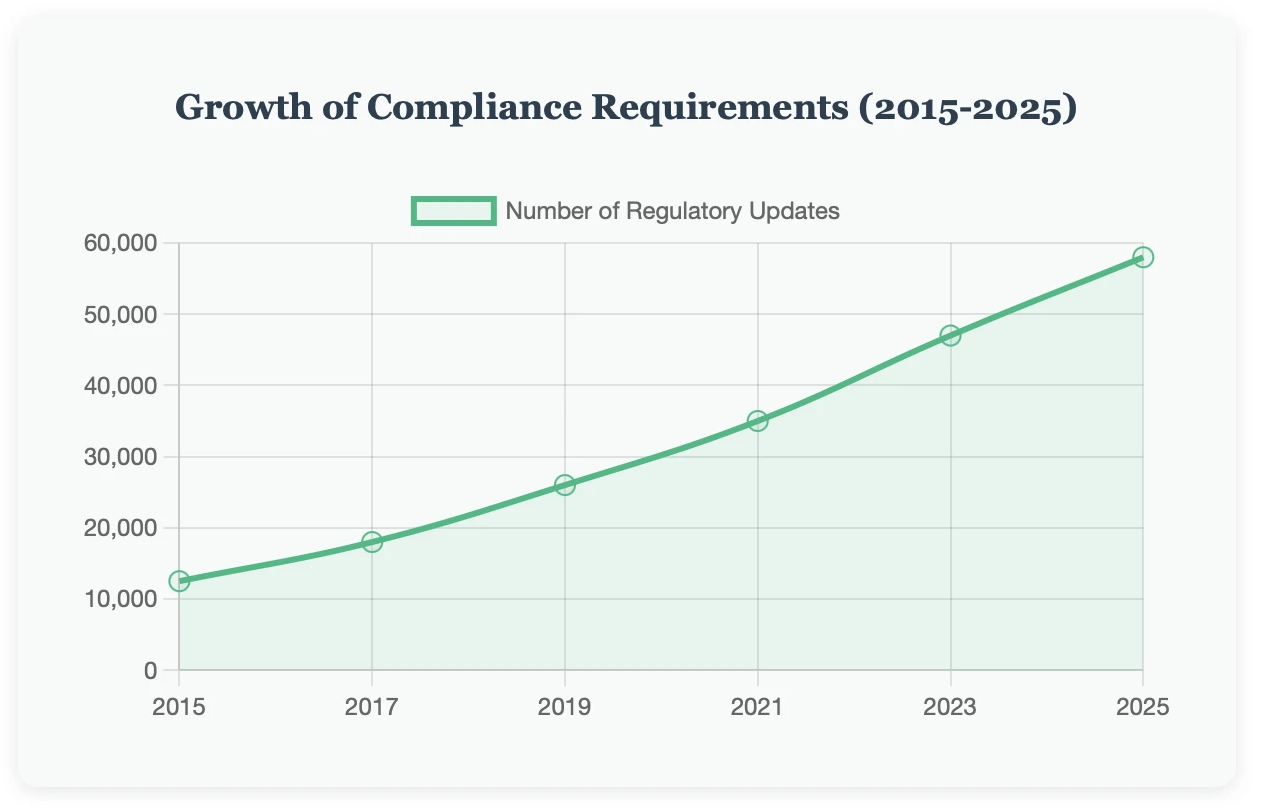
The compliance landscape has exploded in complexity. With global regulatory requirements multiplying and penalties reaching record levels, organizations face growing compliance pressure. Yet the same technology reshaping other business functions is now being applied to regulatory challenges with increasing sophistication.



The Compliance Crisis That Sparked a Revolution
The compliance crisis stems from an unsustainable collision of surging regulatory complexity and outdated manual processes. Financial institutions spent over $270 billion on compliance in 2024 while still facing record-breaking fines, proving that traditional spreadsheet-driven approaches cannot scale to meet real-time monitoring and reporting demands imposed by regulations like GDPR, CCPA, and MiFID II.
The numbers tell the story. Financial institutions alone spent over $270 billion on compliance in 2024, according to Thomson Reuters' Cost of Compliance Report (Thomson Reuters, 2024). Meanwhile, regulatory fines continued to climb—global financial penalties exceeded $6.6 billion in 2024 (Fenergo, 2024). SEC Chair Gary Gensler noted in a 2023 address that "technology is outpacing regulation, and our markets are increasingly interconnected," underscoring the urgency for compliance innovation.
The traditional approach does not scale. When regulations like GDPR, CCPA, MiFID II, and others demand real-time monitoring, comprehensive documentation, and instant reporting, manual teams reach their limits. Enter the RegTech stack: an ecosystem of AI-powered tools designed to make compliance manageable and strategic. According to a Deloitte RegTech report, the global RegTech market is projected to exceed $33 billion by 2026 (Deloitte, 2024).
The Essential Components of a Modern RegTech Stack
A modern RegTech stack consists of five core components: intelligent transaction monitoring systems that detect suspicious activity in real time, regulatory intelligence platforms that track rule changes across jurisdictions, automated reporting and documentation tools, risk assessment and scenario analysis engines, and AI-powered identity verification and KYC solutions. The Institute of International Finance (IIF) has emphasized that these components form the foundation of next-generation compliance infrastructure.
1. Intelligent Transaction Monitoring Systems
**What They Do: **These AI-powered systems analyze millions of transactions in real-time, identifying suspicious patterns that would take human analysts months to uncover. Using machine learning algorithms, they adapt to new fraud patterns and continuously improve their detection accuracy.
Modern transaction monitoring tools go far beyond simple rule-based alerts. They employ sophisticated techniques like behavioral analytics, network analysis, and anomaly detection. For instance, instead of just flagging transactions over $10,000, these systems understand normal behavior patterns for each customer and identify deviations that genuinely warrant investigation.
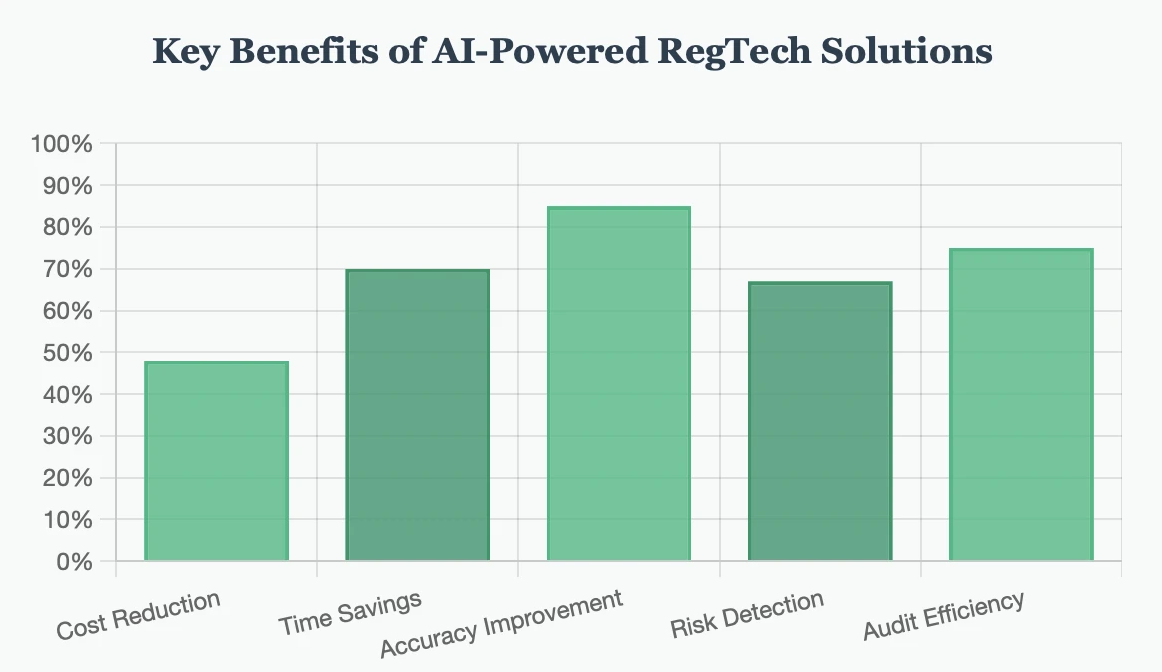
Companies like ComplyAdvantage and NICE Actimize have advanced this space, with some implementations reducing false positives by up to 70% according to vendor-reported case studies. The Financial Crimes Enforcement Network (FinCEN) has encouraged financial institutions to adopt innovative approaches to anti-money laundering compliance, noting that technology can improve both efficiency and effectiveness. The result: compliance teams can focus on genuine risks rather than investigating false alerts.
2. Regulatory Intelligence Platforms
What They Do: These platforms track, interpret, and operationalize regulatory changes across multiple jurisdictions. They use natural language processing to scan thousands of regulatory sources and automatically alert teams to relevant changes.
Imagine trying to keep up with regulatory changes across 50 countries manually. It's virtually impossible. Regulatory intelligence platforms like Compliance.ai and RegTech Insight use AI to monitor regulatory bodies, industry publications, and legal updates worldwide, then distill this information into actionable intelligence tailored to your organization's specific needs.
3. Automated Reporting and Documentation
Regulatory reporting is perhaps the most time-consuming aspect of compliance work. Modern RegTech tools automate this process end-to-end, from data collection to report generation and submission. Solutions like Trunomi and AxiomSL can pull data from dozens of sources, validate it for accuracy, format it according to regulatory specifications, and submit reports automatically—all while maintaining comprehensive audit trails.
The beauty of these systems lies in their ability to handle multiple reporting frameworks simultaneously. A single transaction might need to be reported under different regulations, each with unique requirements. AI-powered reporting tools manage this complexity effortlessly, ensuring consistency and reducing the risk of costly errors.
4. Risk Assessment and Scenario Analysis Tools
What They Do: These advanced analytics platforms use predictive modeling to assess potential risks before they materialize. They simulate various scenarios to help compliance officers understand potential impacts and prepare appropriate responses.
Forward-thinking compliance isn't just about monitoring current activities—it's about anticipating future risks. Modern risk assessment tools employ machine learning models trained on historical data to predict where risks might emerge. They can simulate the impact of regulatory changes, market shifts, or operational modifications on your compliance posture.
5. Identity Verification and KYC Solutions
Know Your Customer (KYC) processes have traditionally been manual, slow, and expensive. AI-powered identity verification tools like Onfido and Jumio have transformed this landscape. Using computer vision, biometric analysis, and document verification algorithms, these platforms can verify identities in minutes rather than days—all while providing superior accuracy and fraud detection.
The sophistication of these tools is remarkable. They can detect forged documents, identify deepfakes, perform liveness checks, and cross-reference data across multiple databases—all in real-time. For customers, this means faster onboarding. For compliance teams, it means better security and reduced operational costs.
Real-World Impact: A major European bank implemented an AI-powered KYC solution and reduced customer onboarding time from 5 days to 15 minutes, while simultaneously improving fraud detection rates by 60%. This isn't science fiction—it's the new standard.
The Human Element: Why AI Augments, Not Replaces
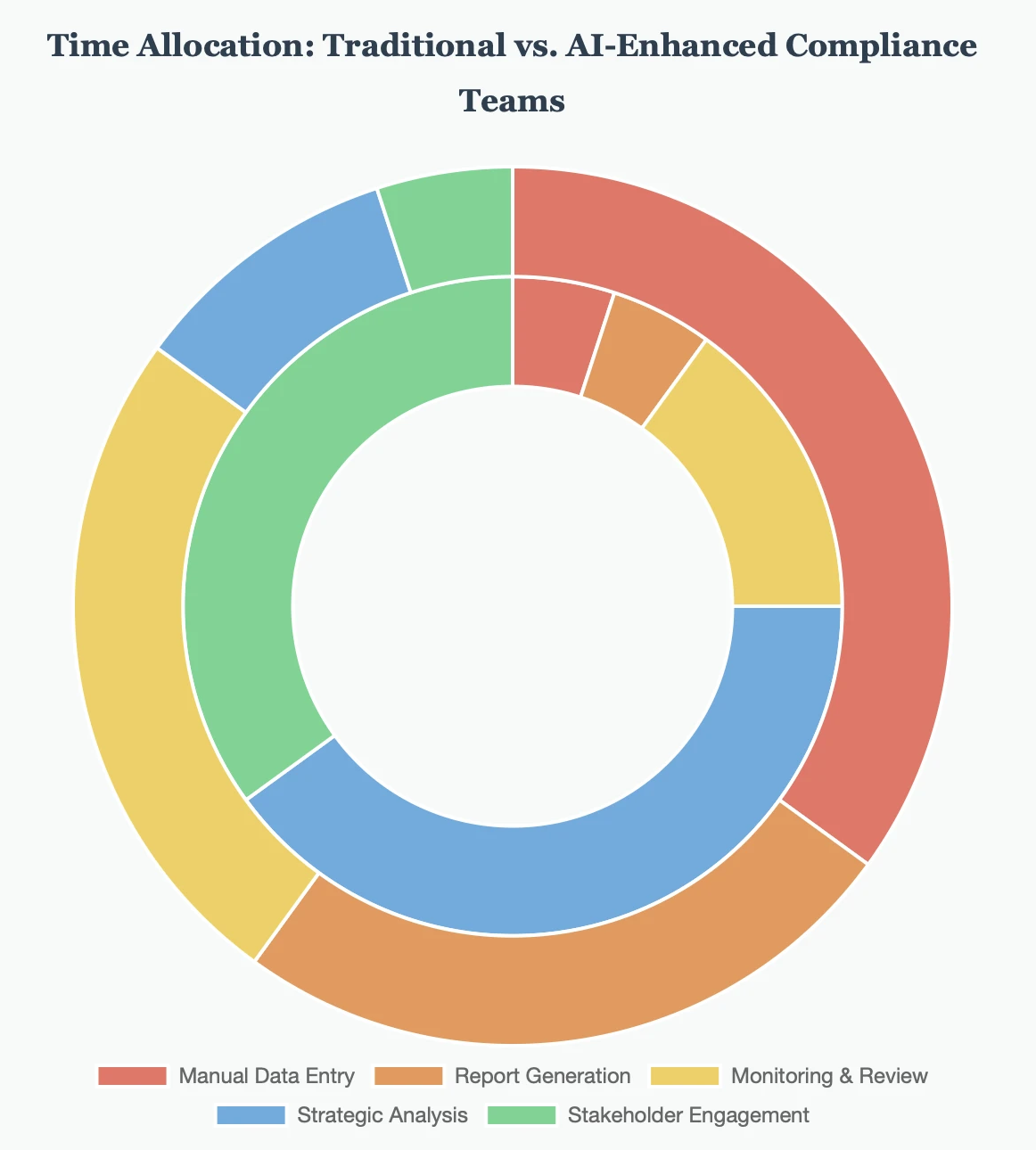
AI-powered RegTech tools serve as force multipliers for compliance teams, not replacements. They automate repetitive, data-intensive tasks such as transaction screening and report generation, freeing human experts to focus on strategic decision-making, complex investigations, stakeholder engagement, and fostering an organizational culture of compliance.
RegTech tools are force multipliers, not replacements. The most successful compliance operations use AI to handle repetitive, data-intensive tasks, freeing human experts to focus on strategic decision-making, complex investigations, and relationship management. As former SEC Commissioner Hester Peirce stated in a 2023 speech, "Technology should serve as a tool for compliance, not a substitute for the judgment and expertise of compliance professionals." A PwC Global Risk Survey found that 72% of risk and compliance leaders view AI as augmenting rather than replacing human roles (PwC, 2024).
Think of it this way: Would you rather have your compliance officers spending 80% of their time on data entry and manual reviews, or would you prefer them focusing on risk strategy, stakeholder engagement, and building a genuine culture of compliance? The answer is obvious, yet many organizations still operate under the old model.
Building Your RegTech Stack: Practical Considerations
Building an effective RegTech stack requires starting with your highest-impact compliance pain points, then selecting tools with strong API integration capabilities, transparent and explainable decision-making for regulators, and scalable architecture. Equally important is investing in change management and team training to ensure adoption across the organization.
Where should organizations begin? The AICPA's Guide to Audit Data Analytics recommends a risk-based approach to technology adoption, starting with the areas of greatest compliance exposure. Here are the key considerations for building an effective RegTech stack:
Start with your pain points. Don't adopt technology for technology's sake. Which compliance processes consume the most resources? Where do errors most frequently occur? What keeps you up at night? These answers should guide your priorities.
Ensure integration capabilities. Your RegTech tools need to communicate with existing systems—core banking platforms, CRM systems, data warehouses, and more. Look for solutions with robust APIs and proven integration capabilities.
**Prioritize explainability. **When regulators come knocking, "the AI said so" isn't an acceptable answer. Choose tools that provide clear explanations for their decisions and maintain comprehensive audit trails.
Consider scalability. Your compliance needs will evolve. Select solutions that can grow with your organization and adapt to new regulatory requirements without requiring complete overhauls.
Don't neglect change management. The best technology fails if people don't use it effectively. Invest in training, communicate benefits clearly, and involve compliance teams in the selection process.
The Road Ahead: Future Trends in RegTech
Key future RegTech trends include federated learning for privacy-preserving cross-institutional intelligence, advanced natural language processing that interprets regulatory intent rather than just text, blockchain-based immutable audit trails with smart-contract enforcement, and predictive compliance systems that identify and prevent violations before they occur.
The RegTech transformation is still in its early stages. According to the Bank for International Settlements (BIS), RegTech adoption among global financial institutions increased 45% between 2021 and 2024 (BIS, 2024). PCAOB Chair Erica Williams noted in a 2024 address that "audit firms must embrace technology responsibly, ensuring that innovation strengthens rather than undermines audit quality." Looking ahead, several trends are poised to further transform compliance operations:
Federated learning and privacy-preserving AI will enable organizations to benefit from shared intelligence without compromising sensitive data. Imagine compliance models that learn from the collective experience of hundreds of institutions while keeping individual data private.
Natural language processing is becoming sophisticated enough to not just read regulations but truly understand their intent and implications. Future systems will be able to automatically update compliance procedures when regulations change.
Blockchain-based compliance solutions promise immutable audit trails and automated regulatory reporting. Smart contracts could enforce compliance rules automatically, making certain violations technically impossible.
Predictive compliance will shift the paradigm from reactive to proactive. Rather than detecting problems after they occur, AI systems will identify situations likely to lead to compliance issues and trigger preventive actions.