For decades, the stock market has been perceived as the exclusive domain of corporate giants—companies with billions in revenue, armies of lawyers, and the resources to navigate complex regulatory landscapes. But what about the local coffee roaster with a distinctive direct-trade model? The tech startup creating specialized enterprise software? The sustainable fashion brand capturing hearts nationwide?
The Securities and Exchange Commission (SEC) is rewriting the rules of engagement, and small businesses are finally getting their seat at the table.
The Capital Access Challenge
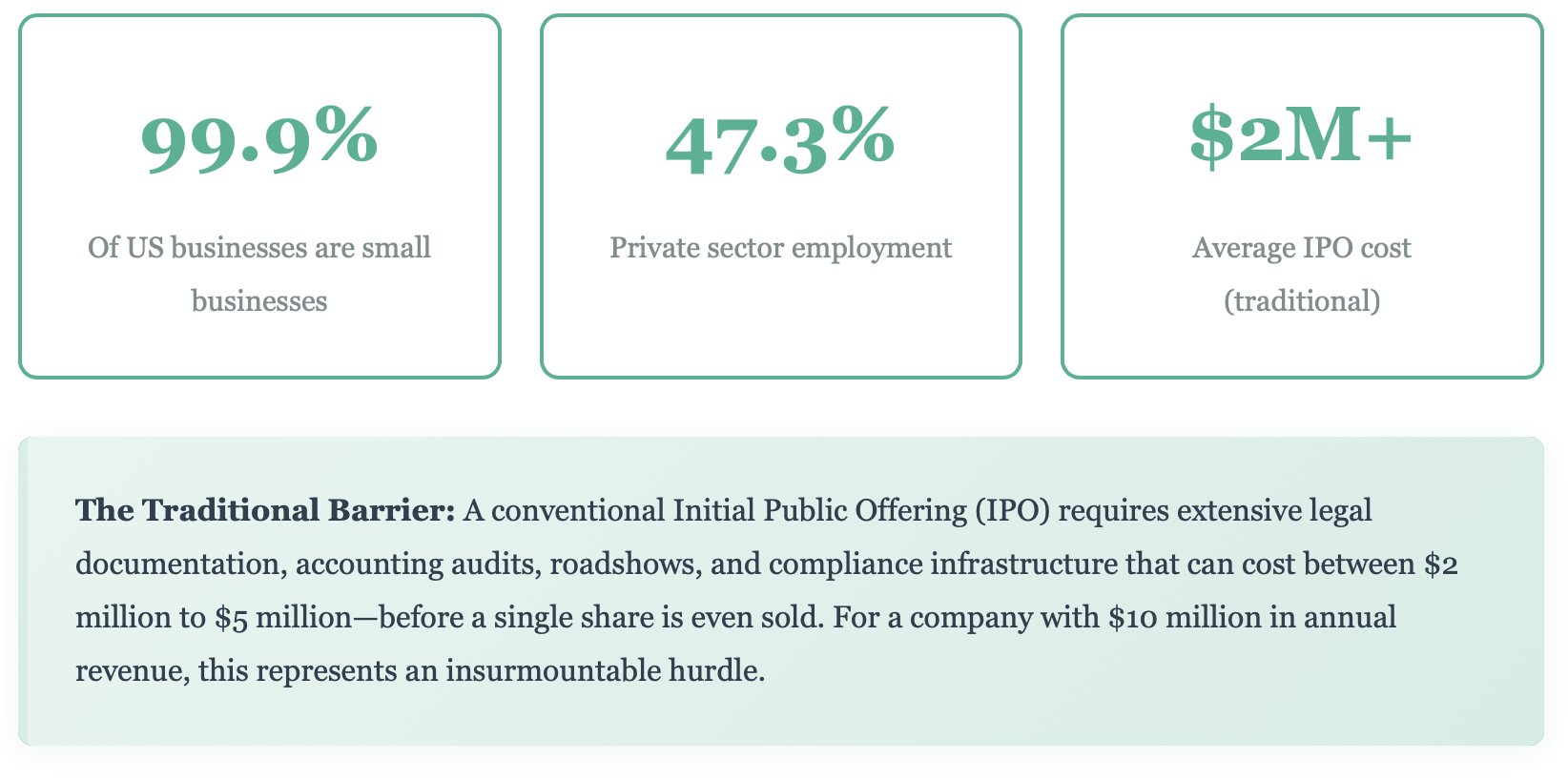
Small businesses face a fundamental barrier to public markets: the cost and complexity of going public often exceed their financial capacity. Despite accounting for nearly half of U.S. private-sector employment, SMEs have historically been shut out of capital markets designed for large corporations with extensive legal and financial resources.
The SEC's Key Capital Access Reforms
The SEC has introduced three key frameworks to help small businesses access public capital markets: Regulation A+ allows raises up to $75 million, Regulation Crowdfunding permits up to $5 million from everyday investors, and modernized Regulation D streamlines unlimited raises from accredited investors. Together, these reforms significantly lower the barriers to going public.
Recognizing this disparity, the SEC has introduced several frameworks designed to expand access to capital markets. These represent a significant shift in how businesses can connect with investors. The SEC's Office of the Advocate for Small Business Capital Formation was established specifically to help small businesses navigate these pathways.
1. Regulation A+: The "Mini-IPO"
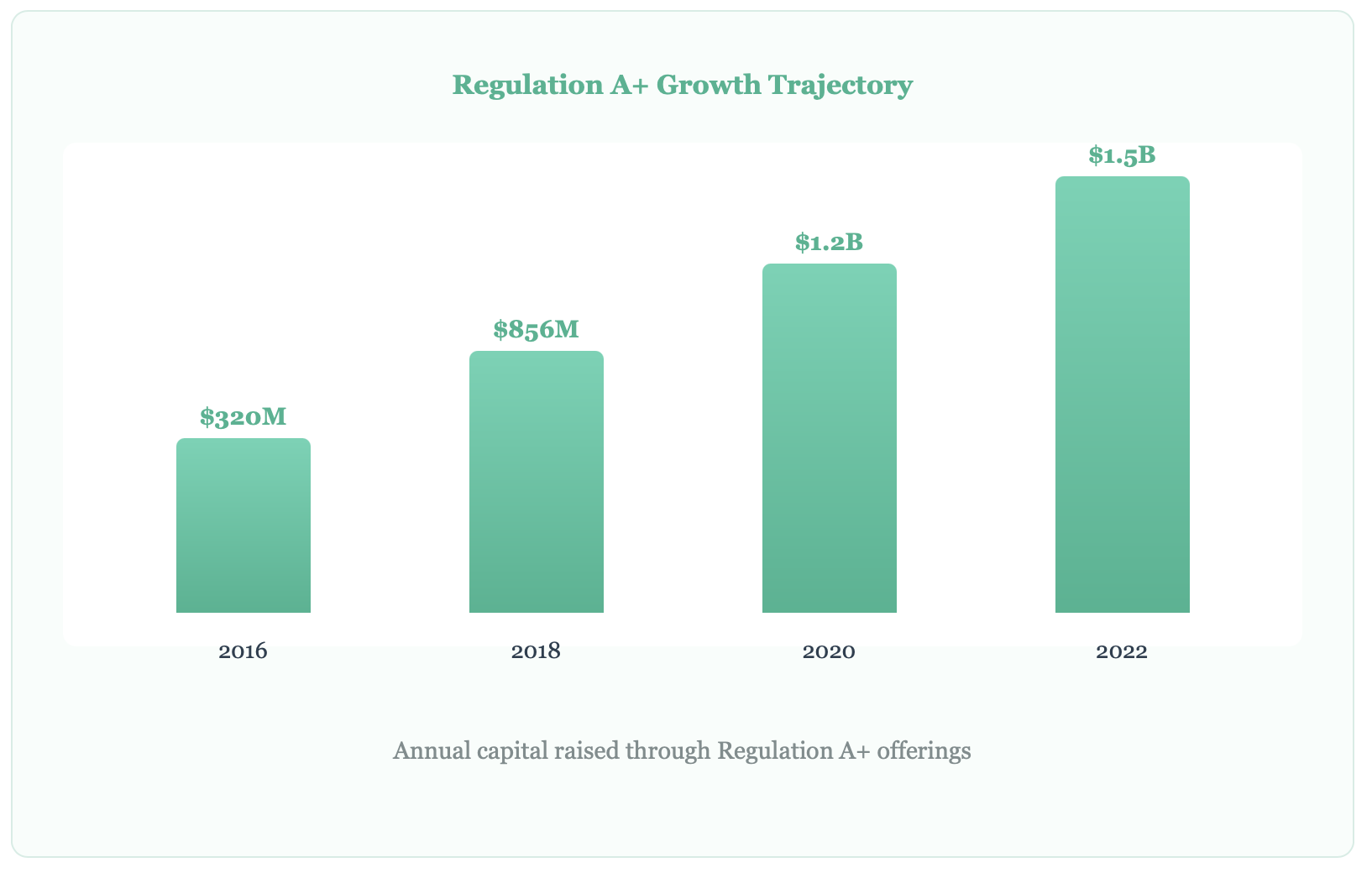
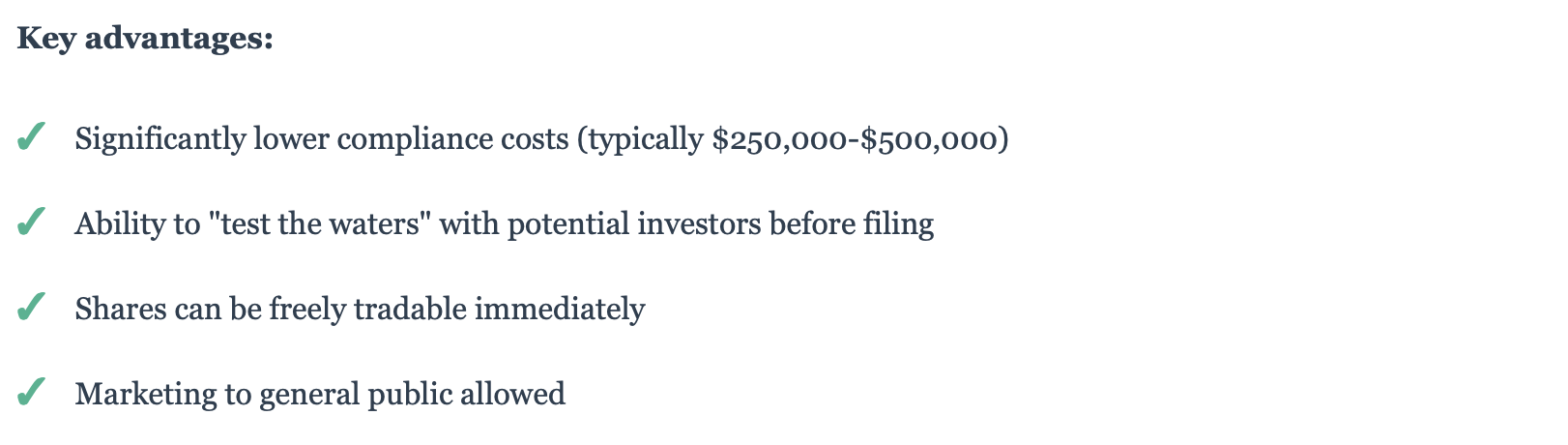
2. Regulation Crowdfunding: Power to the People

3. Regulation D Modernization
The SEC has also streamlined Regulation D offerings, which allow companies to raise unlimited capital from accredited investors. Regulation D remains the largest source of exempt capital, with companies raising over $2 trillion through Reg D offerings in 2023 alone (SEC, 2024). Recent amendments have simplified filing requirements and clarified advertising rules, making it easier for small businesses to connect with angel investors and private equity.
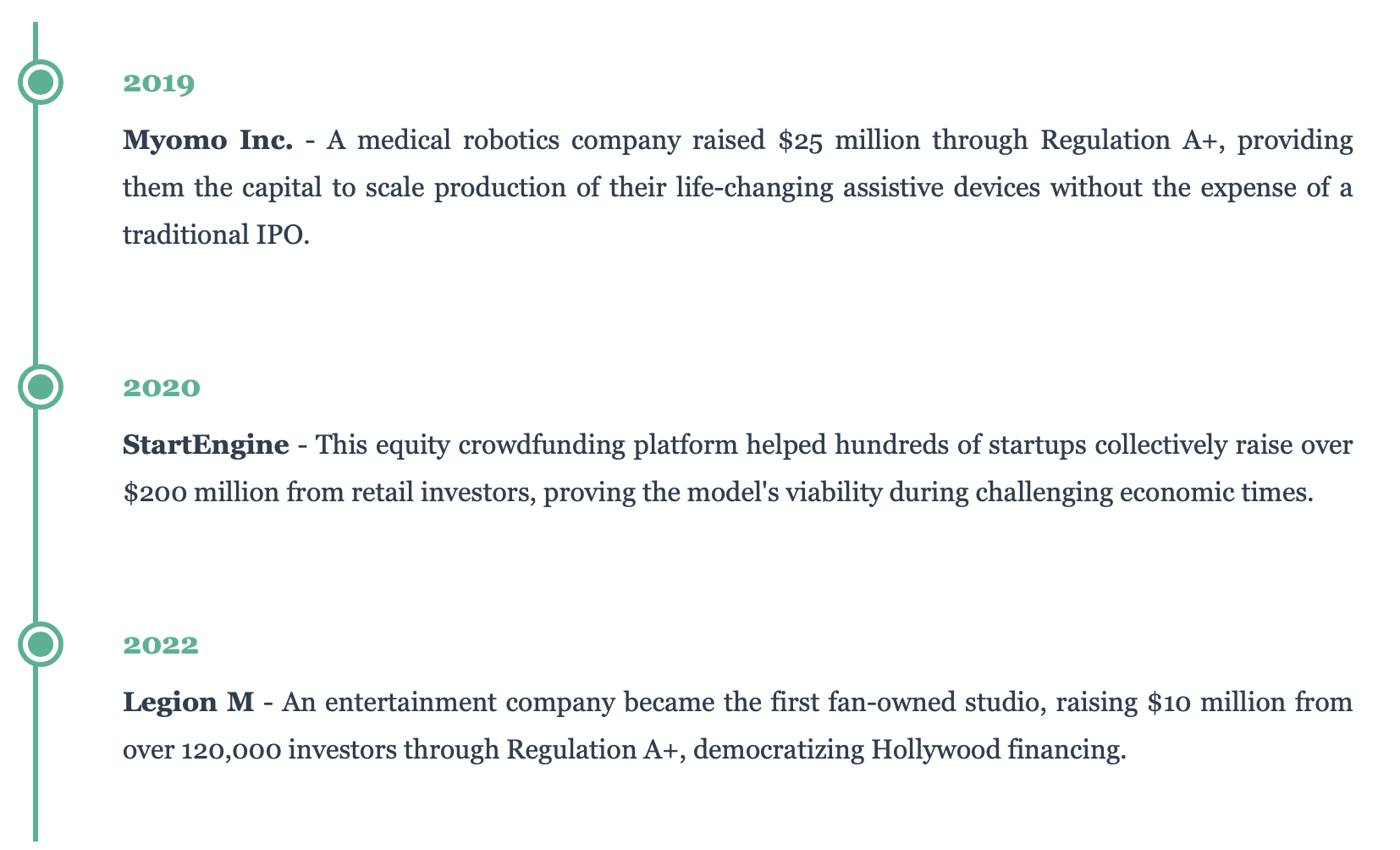
The Ripple Effects
SEC capital access reforms are producing broad economic benefits, including accelerated job creation at funded companies, greater economic diversity through lower barriers for women-led and minority-owned businesses, and expanded investor opportunity by allowing retail investors to participate in early-stage growth that was previously reserved for accredited or institutional investors.
These regulatory changes are creating cascading benefits throughout the economy:
Job Creation: Small businesses that successfully raise capital through these mechanisms grow faster, creating employment opportunities in their communities.
Economic Diversity: By lowering barriers to entry, the SEC is enabling businesses in underserved communities and innovative sectors to access growth capital. According to the SEC's Office of the Advocate for Small Business Capital Formation Annual Report, women-led and minority-owned businesses have increased their use of Regulation Crowdfunding, with women-led companies accounting for roughly 30% of crowdfunding offerings in recent years (SEC OASB, 2023). These businesses, historically underfunded by traditional venture capital, are finding new pathways to scale.
Investor Opportunity: Retail investors now have access to investment opportunities previously reserved for the wealthy. Former SEC Commissioner Hester Peirce has stated, "Expanding access to private markets is not just about helping companies raise money; it's about giving everyday Americans the chance to participate in wealth creation." This expansion allows ordinary people to participate in wealth creation at earlier stages of business growth.
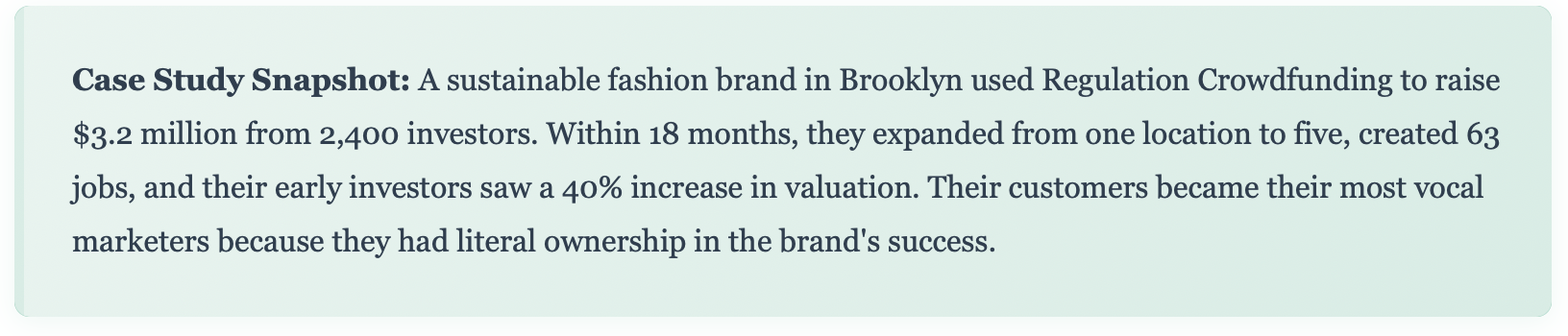
Challenges and Considerations
Despite simplified regulations, small businesses pursuing public capital still face meaningful hurdles including disclosure obligations, shareholder management, and investor relations demands. Companies need competent legal and financial counsel, solid business fundamentals, and the operational maturity to handle public scrutiny, even under lighter-touch frameworks like Regulation A+ or Regulation Crowdfunding.
While the SEC's reforms are substantial, they're not without challenges. Small businesses must still navigate disclosure requirements, understand their obligations to shareholders, and manage the complexities of being accountable to potentially thousands of investors.
The cost savings compared to traditional IPOs are meaningful, but companies still need competent legal and financial advice. According to PwC's IPO research, a traditional IPO can cost $5 million to $10 million in underwriting and advisory fees alone, while Regulation A+ offerings typically cost a fraction of that (PwC, 2023). However, the broader investor base also means companies must build investor relations capabilities they might not have needed with just a few angel investors or a single VC firm.
Additionally, not every business is ready or appropriate for public investment. Companies need solid business fundamentals, clear growth strategies, and the operational maturity to handle increased scrutiny and accountability.
The Future of Small Business Finance
The future of small business finance is shaped by ongoing SEC refinements, including proposals to raise crowdfunding limits, simplify reporting requirements, and explore blockchain-based securities. Technology platforms and AI tools are further reducing offering costs, making it increasingly practical for small companies to access public capital markets without traditional intermediaries.
The SEC continues to refine these regulations based on market feedback and evolving economic needs. Recent discussions have focused on further increasing the Regulation Crowdfunding limit, simplifying ongoing reporting requirements, and exploring blockchain-based securities that could further reduce costs and increase efficiency.
Technology is also playing a crucial role. Online platforms have made it easier than ever for businesses to conduct these offerings, connecting them with investors across the country with minimal overhead. Artificial intelligence tools are helping small businesses prepare the necessary documentation more affordably.
For entrepreneurs, this represents a meaningful shift in capital access. For investors, it opens doors to participate in the American Dream at the ground floor. And for the economy as a whole, it means more diverse funding sources, more innovation, and a more resilient economic ecosystem.
The pathway from local startup to public company is becoming more accessible, one regulatory reform at a time. The SEC's ongoing work to lower barriers to capital formation continues to expand opportunities for businesses and investors alike.