September 15, 2008. While most of Wall Street was still processing their morning coffee, Lehman Brothers filed for bankruptcy. That same day, Bank of America announced its acquisition of Merrill Lynch, and by the next day, the Federal Reserve was bailing out AIG. In the span of 72 hours, the financial world as we knew it had fundamentally changed.
But here's what many don't realize: while the headlines focused on collapsed investment banks and government bailouts, a quieter revolution was happening in the back offices of financial institutions worldwide. Regulatory reporting—once viewed as a necessary evil—suddenly became the lifeline that separated survivors from casualties.
The 2008 financial crisis wasn't just a market event; it was a stress test that exposed fatal flaws in how financial institutions tracked, reported, and understood their own risk. And the lessons learned from that chaos continue to shape how we approach regulatory compliance today.
When Standard Playbooks Fail: The 2008 Wake-Up Call
The 2008 financial crisis revealed that pre-crisis regulatory reporting was fundamentally inadequate for capturing real-time institutional risk. Firms like Bear Stearns showed adequate capital ratios in their filings yet collapsed within days, exposing a systemic failure: reports delivered the right numbers too late, in formats that lacked the context needed for crisis decision-making. The Financial Crisis Inquiry Commission concluded in its 2011 report that "the crisis was avoidable" and that failures in financial regulation and supervision proved devastating (FCIC, 2011).
Before 2008, regulatory reporting was largely a checkbox exercise. Quarterly reports were filed on schedule, risk metrics were dutifully calculated, and everyone assumed the system was working. The problem? The crisis underscored the importance of robust risk management practices within financial institutions, as banks learned that excessive leverage and inadequate assessment of counterparty risks could lead to catastrophic outcomes.
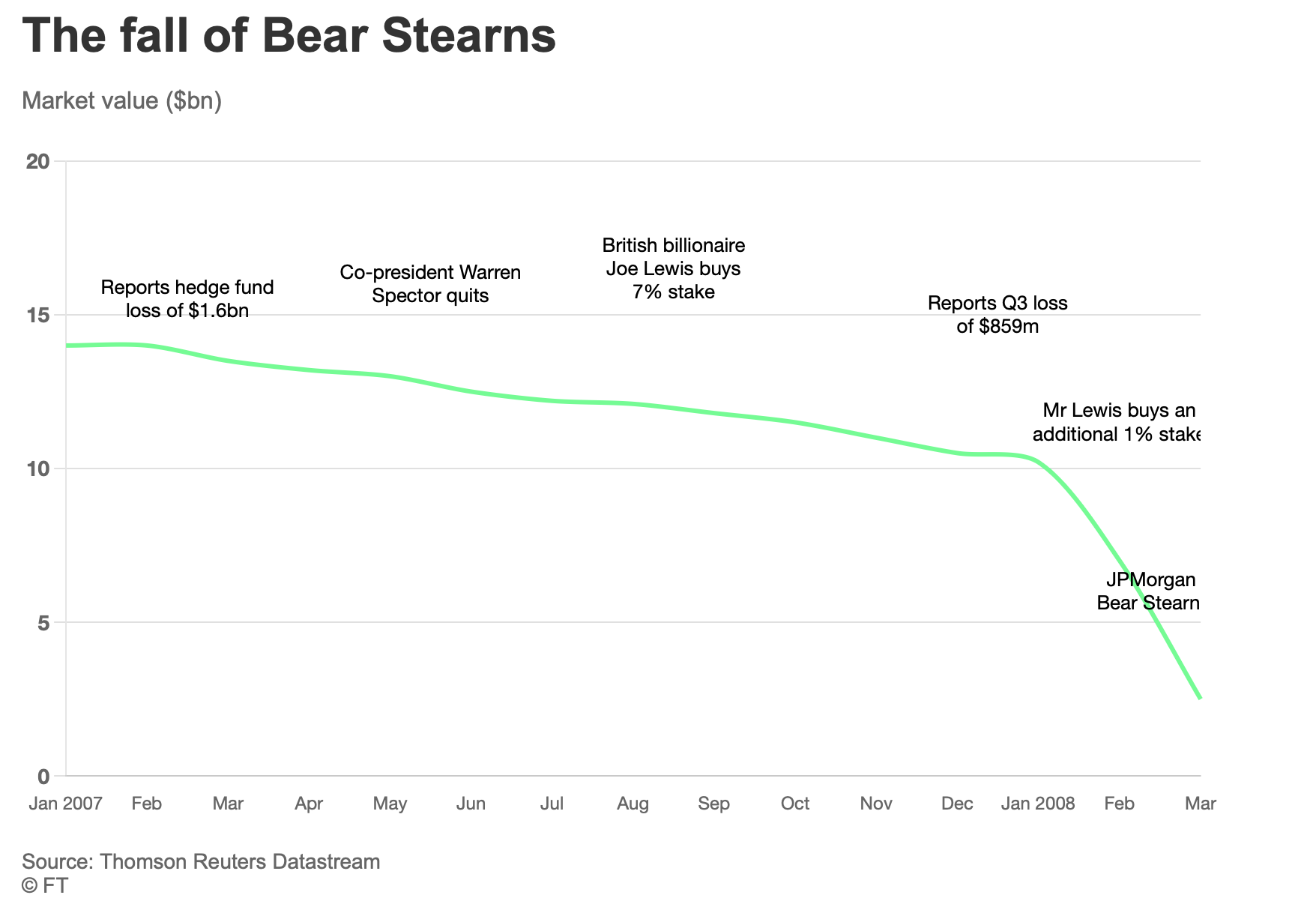
Take Bear Stearns, for example. In March 2008, the investment bank went from apparently healthy to requiring a Federal Reserve bailout in the span of days. Their regulatory filings had shown adequate capital ratios and reasonable risk exposure. Yet when the crisis hit, these reports proved woefully inadequate at capturing the firm's true financial health.
(For more information, read here)
The issue wasn't just about having the wrong numbers—it was about having the right numbers too late, in the wrong format, and without the context needed for real-time decision making.
The Reporting Revolution That Followed
The aftermath of 2008 brought unprecedented changes to regulatory reporting requirements. The Basel III capital and liquidity standards were adopted worldwide, requiring banks to hold significantly higher capital reserves. According to the Bank for International Settlements, global bank capital ratios increased from an average of roughly 7% pre-crisis to over 12% by 2020 as a result of Basel III implementation (BIS, 2021). The Dodd-Frank Wall Street Reform Act of 2010 created the Consumer Financial Protection Bureau and expanded regulatory oversight. Since the 2008 financial crisis, consumer regulators in America have more closely supervised sellers of credit cards and home mortgages in order to deter anticompetitive practices that led to the crisis. Former SEC Chair Mary Jo White emphasized that "robust disclosure and transparency are the foundation of our capital markets, and crises expose the cost of inadequate reporting" (SEC, 2014).
But the changes went far beyond just new rules. The crisis fundamentally shifted how regulators and financial institutions think about reporting:
From Periodic to Real-Time: Pre-2008, quarterly reports were the gold standard. Post-crisis, regulators demanded daily, weekly, and even real-time reporting for systemically important institutions.
From Siloed to Integrated: Before the crisis, different departments often maintained separate reporting systems. The new reality demanded integrated, enterprise-wide risk reporting that could provide a holistic view of institutional health.
From Static to Dynamic: Traditional reports were snapshots in time. Modern regulatory reporting requires dynamic modeling that can stress-test scenarios and project forward-looking risks.
Lessons from the European Sovereign Debt Crisis (2010-2012)
The European sovereign debt crisis demonstrated how reporting inconsistencies can mask systemic risk at the national level. Greece's budget deficit was revealed to be double the amount previously reported to the EU--approximately 12.7% of GDP versus the reported 6.7% (Eurostat, 2010)--triggering enhanced European regulatory frameworks including COREP and FINREP standards that imposed more stringent transparency and reporting requirements on European banks.
Just as the financial world was beginning to implement lessons from 2008, Europe faced its own crisis. The European sovereign debt crisis that began in 2010 provided another masterclass in the critical importance of accurate, timely regulatory reporting.
Greece's debt crisis wasn't just about unsustainable borrowing—it was also about reporting inconsistencies that masked the true scope of the problem. When accurate data finally emerged, it revealed that Greece's budget deficit was actually double what had been previously reported to the European Union.
This crisis led to the implementation of enhanced European regulatory frameworks, including more stringent reporting requirements under COREP (Common Reporting) and FINREP (Financial Reporting) standards. European banks learned that transparency isn't just about compliance—it's about survival.
The COVID-19 Stress Test: Digital Reporting Under Pressure
The COVID-19 pandemic served as a real-world stress test for post-2008 regulatory reporting infrastructure. According to Deloitte's COVID-19 financial reporting survey, 68% of financial institutions with automated reporting systems maintained normal filing timelines during the pandemic, compared to only 31% of those relying primarily on manual processes (Deloitte, 2021). Institutions that had invested in digital reporting systems, automated workflows, and real-time risk monitoring maintained operations through remote work conditions and unprecedented market volatility. Those still relying on manual processes and legacy systems struggled to complete reporting cycles with distributed teams.
Fast forward to March 2020. As the world went into lockdown, financial markets experienced volatility not seen since 2008. But this time, something was different. While markets crashed and economies shuttered, regulatory reporting systems largely held firm.
The difference? Nearly a decade of post-crisis investments in digital infrastructure, automated reporting systems, and real-time risk monitoring. Banks that had modernized their regulatory reporting capabilities found themselves able to maintain operations even with remote workforces and unprecedented market conditions.
Those still relying on manual processes and legacy systems faced a different reality. Suddenly, the quarterly reporting cycles that used to take weeks of coordinated effort had to be completed by teams working from kitchen tables, using VPNs to access critical systems.
The Modern Regulatory Reporting Playbook
The modern regulatory reporting framework rests on four pillars: automation of data collection, validation, and report generation using AI and machine learning; rigorous data governance to prevent errors from propagating through reporting systems; integrated platforms that serve multiple regulatory requirements while providing real-time risk visibility; and dynamic stress testing capabilities that model forward-looking crisis scenarios rather than just reporting historical snapshots. PwC's Global Risk Survey found that 73% of financial institutions planned to increase investment in regulatory technology (RegTech) in 2024 (PwC, 2024).
Today's most resilient financial institutions have learned to treat regulatory reporting not as a compliance burden, but as a strategic capability. Here's what separates the leaders from the laggards:
Automation is Non-Negotiable: Manual data collection and report preparation are vestiges of a pre-digital age. Modern regulatory reporting leverages AI and machine learning to automate data collection, validation, and report generation.
Data Quality is Everything: The old garbage-in, garbage-out principle has never been more relevant. Leading institutions invest heavily in data governance, implementing controls that catch errors before they propagate through reporting systems.
Integration Across Systems: Rather than maintaining separate reporting silos, smart organizations build integrated platforms that can serve multiple regulatory requirements while providing real-time visibility into institutional risk.
Scenario Planning and Stress Testing: Static reporting tells you where you've been. Dynamic modeling tells you where you're going. Modern regulatory reporting includes robust stress testing capabilities that can model various crisis scenarios.
The Technology Edge: Why AI Matters More Than Ever
AI addresses the fundamental scalability challenge of modern regulatory reporting, where a single major bank may file hundreds of reports across multiple jurisdictions with different formats and timing requirements. Former SEC Chair Gary Gensler acknowledged that "technology, including artificial intelligence, has the potential to transform how market participants meet their regulatory obligations" (SEC, 2023). AI-powered systems can automatically map data across frameworks, detect anomalies indicating data quality issues, generate narrative explanations for submissions, and continuously monitor regulatory changes to update reporting processes.
The rise of artificial intelligence in regulatory reporting isn't just about efficiency—it's about survival in an increasingly complex regulatory landscape. Consider the volume challenge: a major bank might need to file hundreds of different regulatory reports across multiple jurisdictions, each with different formats, timing requirements, and data specifications.
Traditional approaches simply don't scale. But AI-powered systems can:
- Automatically map data across different regulatory frameworks
- Identify anomalies that might indicate data quality issues or emerging risks
- Generate narrative explanations for regulatory submissions
- Continuously monitor regulatory changes and update reporting processes accordingly
These capabilities are already in production at major financial institutions, which report measurable improvements in accuracy, timeliness, and cost efficiency of their regulatory filings.
Looking Forward: Preparing for the Next Crisis
Institutions best prepared for the next financial crisis share four capabilities: real-time visibility to generate comprehensive risk reports daily or hourly when conditions require it, regulatory agility to adapt to new reporting requirements without months of development, data-driven decision-making that uses regulatory data as a strategic asset, and deep technology integration that treats reporting infrastructure as a competitive advantage rather than a cost center.
History teaches us that financial crises are not one-time events—they are recurring features of modern financial systems. The question is not whether another crisis will occur, but when, and whether institutions will have the reporting infrastructure in place to respond.
The institutions that will thrive in the next crisis share several characteristics:
Real-Time Visibility: They can generate comprehensive risk reports not just quarterly or monthly, but daily or even hourly when conditions warrant.
Regulatory Agility: Their systems can quickly adapt to new reporting requirements without requiring months of development work.
Data-Driven Decision Making: They use regulatory data not just for compliance, but as a strategic asset for risk management and business decision-making.
Technology Integration: They've moved beyond viewing technology as a cost center, instead treating it as a strategic capability that enables competitive advantage.
The Human Element: Technology Enablement, Not Replacement
AI excels at processing large volumes of regulatory data and generating reports at speed, but human expertise remains essential for interpreting what the data means, identifying emerging risks that lack historical precedent, and communicating effectively with regulators. The most successful regulatory reporting operations combine automated data processing with deep domain knowledge and business judgment.
While technology plays an increasingly important role in regulatory reporting, the human element remains crucial. The most successful organizations combine technological capability with deep regulatory expertise and business judgment.
AI can process vast amounts of data and generate reports at speeds far exceeding manual capacity, but it takes human insight to understand what the data means, identify emerging risks, and communicate effectively with regulators. The AICPA has emphasized that professional judgment remains indispensable in interpreting regulatory data, particularly during periods of market stress when historical patterns may not apply (AICPA, 2023). The most effective regulatory reporting operations combine automated data processing with deep domain knowledge.
Conclusion: Crisis as Catalyst
Every major financial crisis has served as a catalyst for regulatory reporting evolution. The 2008 financial crisis taught us about the importance of comprehensive risk reporting. The European sovereign debt crisis emphasized the need for transparency and consistency. The COVID-19 pandemic proved the value of digital infrastructure and remote capabilities.
As we look toward an uncertain future—with emerging risks from cryptocurrency, climate change, and geopolitical instability—one thing is clear: regulatory reporting will continue to evolve. The institutions that view this evolution as an opportunity rather than a burden will be the ones that not only survive the next crisis but also emerge stronger.
The technology to support these capabilities exists today, and the historical lessons are well documented. Institutions that invest in modern reporting infrastructure, data governance, and AI-augmented workflows will be better positioned to maintain compliance when the next crisis arrives.
This analysis draws from research into regulatory reporting evolution following major financial crises, including post-2008 regulatory reforms, European banking supervision enhancements, and developments in AI-powered compliance technology.