Set up the 10-Q before the books close
Seed SEC Filing Automation from your last filing, and the roll-forward, tie-out register and review routing are ready when the quarter closes. Finrep files to EDGAR with your agent's Inline XBRL.










From quarter end to EDGAR
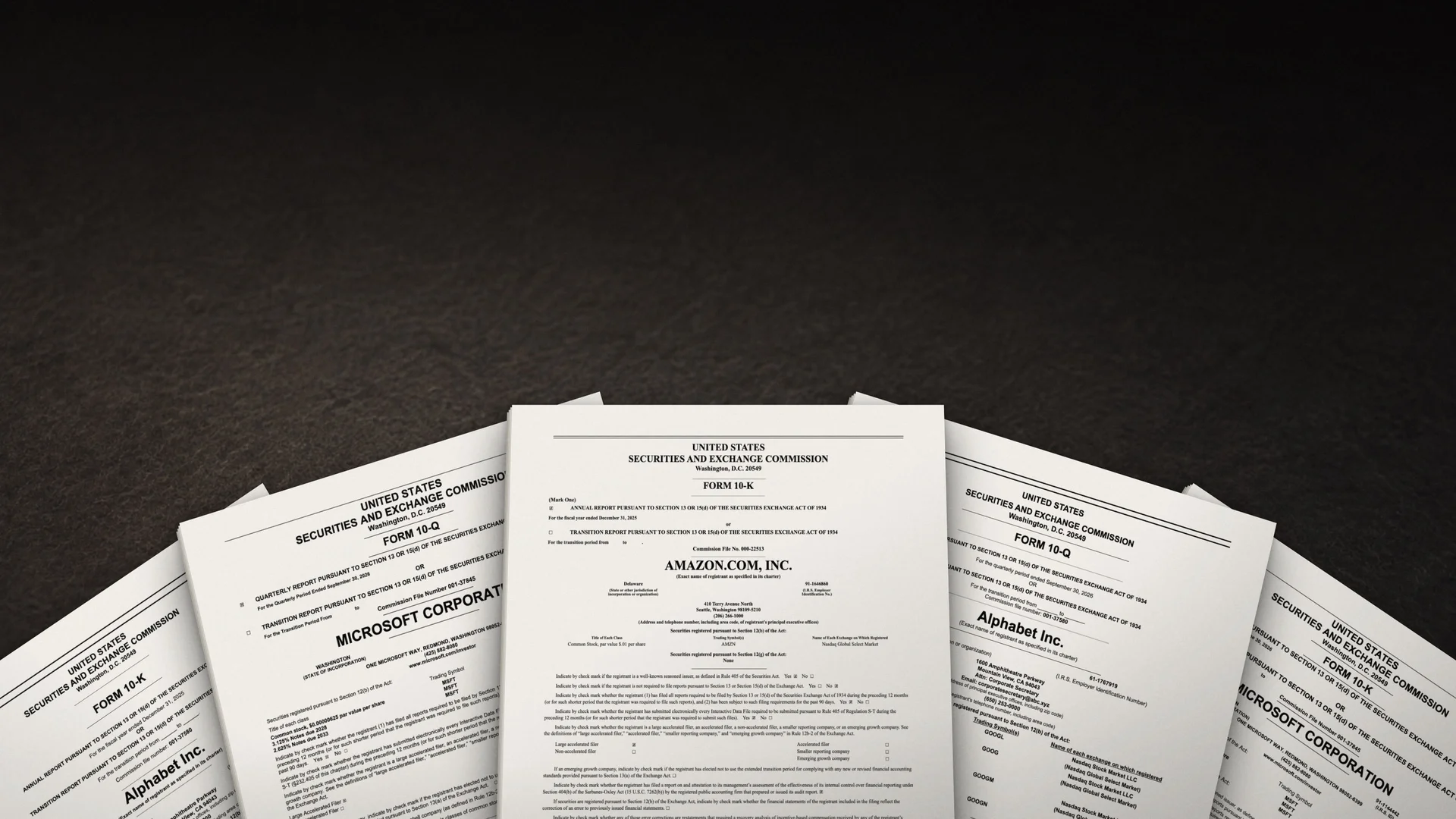
Finrep runs the 10-K and 10-Q cycle in one place: roll forward, tie out to the trial balance, draft changed sections from peers, review and file to EDGAR.
- 01
Before quarter end
New ASUs and staff focus read against last filing
- 02
Close
Trial balance in, mapping confirmed
- 03
Roll forward
The filing moves to the new period
- 04
Tie out
Register run, exceptions cleared
- 05
Benchmark and draft
Changed sections drafted from peers
- 06
Committee and file
Readiness memo, then Finrep files to EDGAR with your agent's Inline XBRL
What Finrep runs each quarter
SEC Filing Automation
Roll-Forward
Prior period to current
Tick-and-Tie
Numbers to the trial balance
Roll forward to FY2026
Sections, workbooks, formulas and linked numbers carry into a fresh FY2026 workspace.
Roll from
FY2025 Annual ReportNew filing title
FY2026 Annual ReportReporting Intelligence
Cross-Period Drift Analysis
Unexplained language changes flagged
Pre-Filing Completeness
Readiness memo and pre-filing check
Note 1. Segments
RedlinesThe Company operates in one reportable segment two reportable segments: Cloud and Services. The CODM reviews segment operating income.
Your auditor reviews and comments on the same draft
Every citation opens its source, so checking takes one click.
Fina checks that each citation opens a real passage
Fina tells you when the sources run out
Your team reviews and signs off on every draft
Where to start
SEC Filing Automation runs the filing. Reporting Intelligence covers research and drafts, free for 14 days.
FAQs
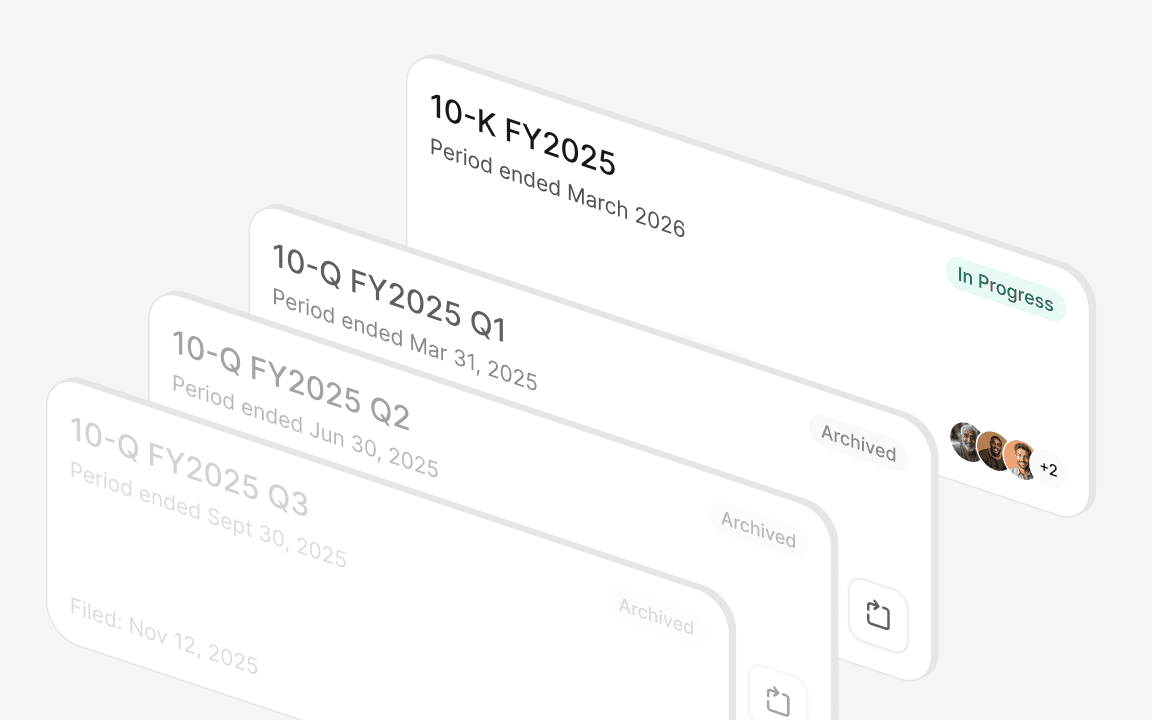
Start the quarter before you file. Seed SEC Filing Automation from your last 10-K or 10-Q so the roll-forward, tie-out register and review routing are ready when the books close.
Not yet. In May 2026 the SEC proposed letting companies file a semiannual Form 10-S in place of 10-Qs, and cutting filer status to two categories. Both are proposals. Until a final rule, the 40-day and 45-day 10-Q deadlines apply, and SEC Filing Automation rolls each 10-Q forward as it does today.
A 10-K is due 60 days after fiscal year end for large accelerated filers, 75 days for accelerated filers and 90 days for everyone else. 10-Qs are due 40 days after quarter end, or 45 for non-accelerated filers. Finrep's Filing Deadline widget tracks your dates.
Finrep rolls the prior filing forward, links numbers to your workbook and runs the tie-out register, drafts changed sections from peer practice, routes review to your team and auditors, writes a readiness memo and files to EDGAR with your filing agent's Inline XBRL.
Yes. SEC Filing Automation gives your auditors time-boxed access to the draft, where they can view and comment, and your team resolves each comment in the same workspace before the filing goes out.