
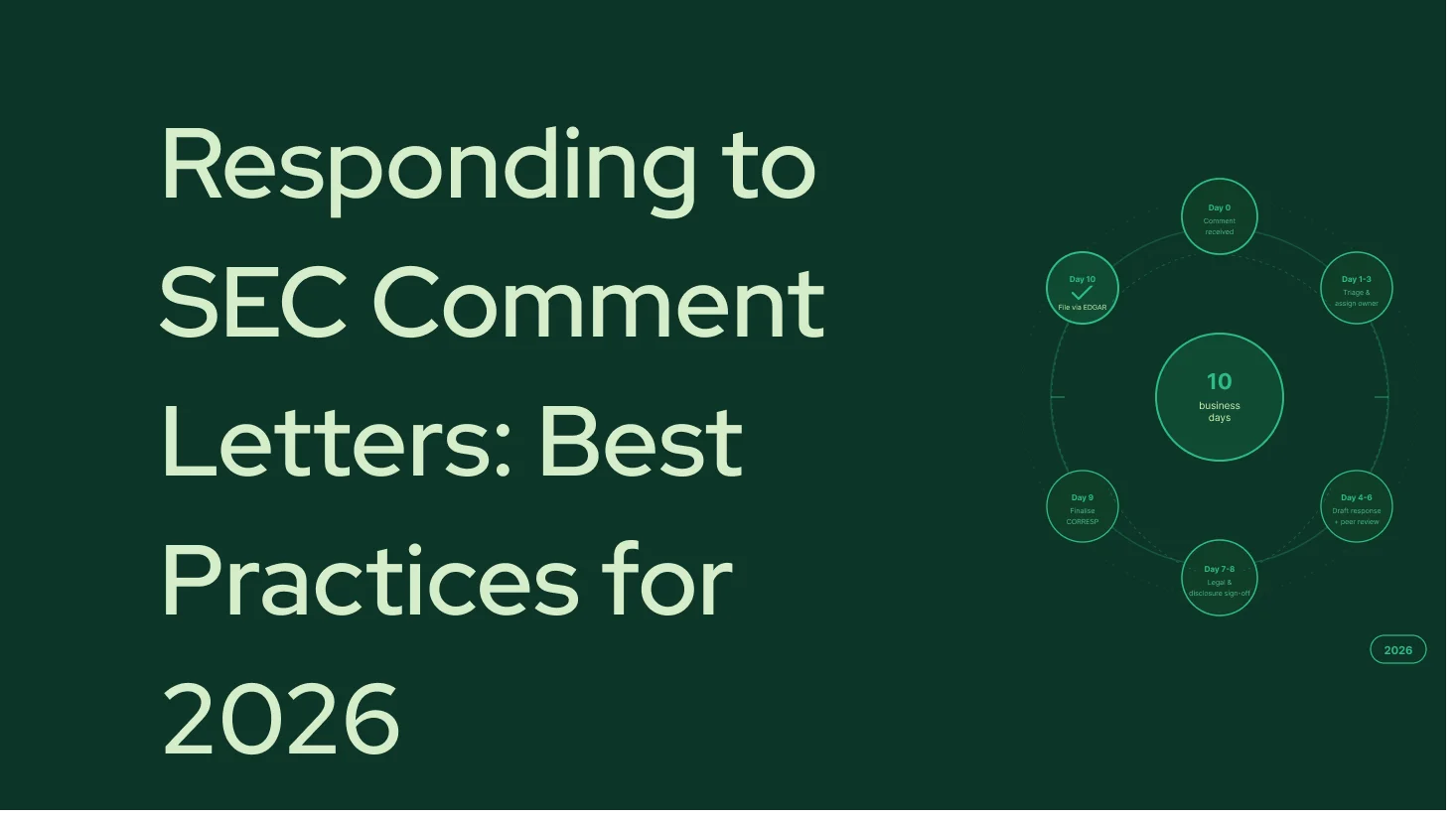
Responding to SEC Comment Letters: Best Practices for 2026
Responding to SEC comment letters is a critical task for finance and compliance professionals. It ensures compliance and maintains investor confidence. This guide outlines best practices and recent trends to help companies respond effectively.
Understanding SEC Comment Letters
SEC comment letters are issued when the Securities and Exchange Commission (SEC) reviews a company's filings and finds issues that need clarification or correction. These letters often focus on financial statements, management's discussion and analysis (MD&A), and critical accounting estimates. Recent trends highlight increased scrutiny on climate-related disclosures and executive compensation source.
Key takeaway: Responding promptly and thoroughly to SEC comment letters is crucial to avoid enforcement actions and maintain regulatory compliance.
Best Practices for Responding
1. Timeliness
The SEC typically requests responses within 10 business days. While extensions are possible, timely responses demonstrate diligence and reduce the risk of prolonged scrutiny source.
2. Thoroughness
- Address Each Comment: Break down each comment and provide detailed responses with specific references to the original filing.
- Cite Supporting Documents: Use additional filings or financial statements to support your responses.
3. Clarity and Professionalism
- Clear Communication: Ensure that responses are clear and professionally written.
- Avoid Unnecessary Details: Focus on addressing the comments directly without extraneous information.
4. Engagement with the SEC
If any comments are unclear, engage with the SEC staff for clarification. This proactive approach can prevent misinterpretations and further rounds of comments.
Recent Trends to Consider
Climate-Related Disclosures
The SEC has increased its focus on climate-related disclosures. Companies should ensure their disclosures are comprehensive and align with SEC expectations source.
Executive Compensation
Executive compensation is another area under scrutiny. Companies must ensure transparency and consistency in their disclosures to avoid SEC comments.
Avoiding Further Rounds of Comments
- Preemptive Review: Conduct internal audits of filings to identify potential issues before submission.
- Utilize Experts: Engage external experts for complex issues to ensure compliance with SEC standards.
Examples of Successful Responses
Providing examples of well-crafted responses can help guide companies in preparing their own. An effective response addresses each SEC comment thoroughly and provides supporting documentation where necessary.
Are SEC Comment Letter Responses Public?
Yes, SEC comment letter responses become public a few weeks after the comments are resolved. This transparency underscores the importance of accurate and thorough responses source.
How Common Are SEC Comment Letters?
SEC comment letters are a regular part of the filing process for public companies. While not every filing receives a comment letter, they are common enough that companies should be prepared to address them.
Conclusion
Responding to SEC comment letters effectively involves understanding the process, adhering to best practices, and staying informed about regulatory trends. By doing so, companies can ensure compliance and maintain investor confidence.
FAQ
1. How can I find SEC comment letters?
Use the SEC's EDGAR database to search for public comment letters and responses source.
2. What should I include in my response?
Include a detailed response to each comment, citing relevant documents and providing clear explanations.
3. Can I request an extension for responding?
Yes, extensions can be requested if additional time is needed to prepare a comprehensive response.
4. What are the consequences of inadequate responses?
Inadequate responses can lead to further rounds of comments and potential enforcement actions.
5. How can I prepare for potential SEC comments?
Conduct regular audits of filings and stay updated on SEC trends to anticipate potential comments.